Debt Payoff Calculator

Create a personalized debt payoff plan using the avalanche (highest interest first) or snowball (smallest balance first) method.

MT
Written by Michael Torres, CFA
Senior Financial Analyst
JW
Fact-checked by Dr. James Wilson, PhD
Options Strategy Researcher
Financial PlanningFact-Checked

Input Values

$

Combined balance of all debts you want to pay off.

%

Weighted average interest rate across all debts.

$

Total amount you can put toward debt each month.

$

Additional amount above minimum payments.

Results

Debt-Free Date
0
Months to Pay Off0
Total Interest Paid
$0.00
Total Amount Paid$0.00
Interest Saved with Extra Payments$0.00
Results update automatically as you change input values.

How to Pay Off Debt Faster

Paying off debt is one of the most impactful financial decisions you can make. High-interest debt like credit cards (15-25% APR) acts as a guaranteed negative return on your money, costing you hundreds or thousands of dollars in interest each year. This calculator helps you create a debt payoff plan and shows how much faster you can become debt-free by making extra payments or using strategic payoff methods.

The average American household carries approximately $7,951 in credit card debt, $29,000 in auto loans, and $37,000 in student loans. At typical interest rates, minimum payments on these debts could take decades to pay off and cost more in interest than the original balance. A strategic debt payoff plan can save you thousands of dollars and years of payments.

i
The Two Best Debt Payoff Methods

The Avalanche method (paying off highest interest rate first) saves the most money. The Snowball method (paying off smallest balance first) provides the fastest psychological wins. Both are far better than making minimum payments. Choose the method that keeps you most motivated.

Debt Payoff Methods Compared

Avalanche vs. Snowball Method
FeatureDebt AvalancheDebt Snowball
PriorityHighest interest rate firstSmallest balance first
Interest SavedMaximum (mathematically optimal)Less than avalanche
Psychological BenefitSlower initial winsQuick wins build motivation
Best ForDisciplined, numbers-focused peoplePeople who need motivation from progress
Time to Debt-FreeUsually slightly fasterUsually slightly slower
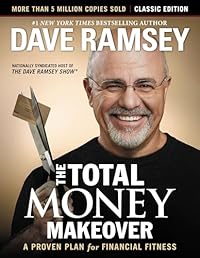
Recommended ByMost financial mathematiciansDave Ramsey and behavioral finance experts
Months to Pay Off Debt
Months = -log(1 - (Balance × Rate / Payment)) / log(1 + Rate)
Where:
Balance = Current debt balance
Rate = Monthly interest rate (APR / 12)
Payment = Fixed monthly payment amount
Debt Payoff Scenario
Given
Total Debt
$25,000
Average APR
15%
Monthly Payment
$600
Extra Payment
$200
Calculation Steps
  1. 1Minimum payment only ($600/mo): 60 months, $10,947 total interest
  2. 2With $200 extra ($800/mo): 38 months, $6,358 total interest
  3. 3Interest saved: $10,947 - $6,358 = $4,589
  4. 4Time saved: 60 - 38 = 22 months
  5. 5Money freed up after payoff: $800/month to invest
Result
Adding $200/month in extra payments saves $4,589 in interest and eliminates debt 22 months sooner. After becoming debt-free, redirecting the $800/month to investments at 7% return builds $132,000 in 10 years.

Step-by-Step Debt Payoff Plan

Become Debt-Free

1
List All Debts
Write down every debt with the balance, interest rate, and minimum payment. Include credit cards, personal loans, auto loans, student loans, and medical debt. This full picture is essential for creating an effective plan.
2
Choose Your Method
Avalanche: Order debts from highest to lowest interest rate. Snowball: Order from smallest to largest balance. Both methods pay minimums on all debts and direct all extra money to the priority debt.
3
Find Extra Money
Review your budget for areas to cut temporarily. Consider a temporary side hustle, selling unused items, or redirecting savings (beyond emergency fund) to debt payoff. Even $100-200 extra per month makes a significant difference.
4
Attack the Priority Debt
Pay the minimum on all debts except your priority debt. Direct all extra money to that one debt. When it is paid off, roll its entire payment to the next debt on your list (the snowball or avalanche roll).
5
Celebrate Milestones and Stay Motivated
Mark each debt payoff as a milestone. The 'roll' effect means each subsequent debt is paid off faster as you redirect larger and larger payments. Use a visual tracker to see your progress.

The True Cost of Minimum Payments

  • $5,000 credit card at 20% APR with 2% minimum payment: 34 years to pay off, $13,931 in total interest
  • $10,000 credit card at 18% APR with $200/month: 93 months (7.75 years) to pay off, $8,622 in total interest
  • $30,000 car loan at 7% APR with $500/month: 72 months to pay off, $5,795 in total interest
  • $50,000 student loan at 6.5% APR with $500/month: 131 months (10.9 years) to pay off, $15,377 in total interest
  • Every $100 extra per month on a $10,000 credit card (18% APR) saves $3,800 in interest and 40 months of payments

Canadian Debt Payoff Considerations

Canadian consumers face similar debt challenges, with average household debt-to-disposable income ratios exceeding 170%. Canadian credit card interest rates average 19.99-22.99% APR, among the highest in the developed world. Canadian student loans from the federal government currently charge a floating rate of prime + 0% or a fixed rate of prime + 2%. Line of credit rates (often 7-12%) are commonly used in Canada as an alternative to personal loans. Canadian consumers can also consider a Consumer Proposal (a legal debt reduction process through a Licensed Insolvency Trustee) as an alternative to bankruptcy for overwhelming debt.

!
Avoid Debt Payoff Traps

Avoid debt consolidation loans with longer terms that reduce monthly payments but increase total interest. Avoid balance transfer cards unless you can pay off the balance before the promotional rate expires. Never take a 401(k) loan to pay off credit cards. And most importantly, stop adding new debt while paying off existing debt.

Frequently Asked Questions

The fastest strategies are: (1) Use the debt avalanche method (highest interest first) to minimize interest costs. (2) Make extra payments by cutting expenses or earning more income. (3) Consider balance transfer to a 0% APR card if you can pay it off within the promotional period. (4) Apply all windfalls (tax refunds, bonuses) to debt. (5) Sell unused items for a lump payment. Combining multiple strategies accelerates your debt-free date significantly.

Sources & References

  • U.S. Securities and Exchange Commission (SEC) - Investor Education
  • Options Clearing Corporation (OCC) - Options Education
  • Chicago Board Options Exchange (CBOE) - Options Strategies
  • Hull, J.C. "Options, Futures, and Other Derivatives" (11th Edition, 2021)

Embed This Calculator on Your Website

Free to use with attribution

Copy the code below to add this calculator to your website, blog, or article. A link back to CoveredCallCalculator.net is included automatically.

<iframe src="https://coveredcallcalculator.net/embed/debt-payoff-calculator" width="100%" height="500" frameborder="0" title="Debt Payoff Calculator" style="border:1px solid #e2e8f0;border-radius:12px;max-width:600px;"></iframe>
<p style="font-size:12px;color:#64748b;margin-top:8px;">Calculator by <a href="https://coveredcallcalculator.net" target="_blank" rel="noopener">CoveredCallCalculator.net</a></p>