Monthly Covered Calls Calculator

Calculate the premium income, annualized return, and optimal strike for a systematic monthly covered call writing program.

MB
Operated by Mustafa Bilgic
Independent individual operator
|Advanced Covered CallsEducational only

Input Values

$

Current price of the stock.

$

Your cost basis per share.

$

Strike for the monthly call.

$

Premium received for the 30-day option.

Months you sell calls (may skip earnings months).

Number of option contracts.

$

Commission per contract per trade.

Results

Monthly Premium Income
$0.00
Annual Premium Income
$0.00
Annualized Yield
0.00%
Monthly Return
0.00%
Monthly Breakeven$96.00
Max Monthly Profit$0.00
Results update automatically as you change input values.

Related Strategy Guides

What Is a Monthly Covered Call Strategy?

A monthly covered call strategy involves systematically selling call options with approximately 30 days to expiration against shares you own, repeating the process each month as each option expires or is closed. This is the most popular timeframe for covered call writing because 30-day options offer the optimal balance between premium income and time decay acceleration. The strategy creates a predictable monthly income stream that can supplement dividends, pensions, or other income sources.

Monthly covered calls are the workhorse strategy for income-focused options traders. By selling 11-12 calls per year per stock position, you build a consistent income stream while maintaining stock ownership. The 30-day timeframe aligns with natural market cycles and gives you monthly opportunities to adjust your strike, reassess your market outlook, and manage your portfolio. Most institutional covered call strategies (including popular ETFs like QYLD and XYLD) use monthly or near-monthly expirations.

i
The 30-Day Sweet Spot

Options with 30 days to expiration occupy the sweet spot on the time decay curve. Theta (daily time decay) accelerates rapidly after 30 days, meaning you capture more decay per day than longer-dated options while still receiving meaningful absolute premium. This is why 30-day calls are the industry standard for covered call programs.

Calculating Monthly Covered Call Income

Annual Premium Income
Annual Income = Monthly Premium × 100 × Contracts × Active Months
Where:
Monthly Premium = Per-share premium for the 30-day call
Active Months = Number of months you sell calls per year
Contracts = Number of contracts per cycle
Annualized Yield
Annualized Yield = (Annual Income / Total Investment) × 100%
Where:
Annual Income = Total premium income for the year
Total Investment = Purchase price × total shares owned
Monthly Covered Call Income Example
Given
Stock
$100
Cost
$96
Strike
$105 (5% OTM)
Premium
$3.00/share
Contracts
3
Months
11
Calculation Steps
  1. 1Monthly income = $3.00 × 100 × 3 = $900/month
  2. 2Annual income = $900 × 11 = $9,900
  3. 3Total investment = $96 × 100 × 3 = $28,800
  4. 4Annualized yield = $9,900 / $28,800 = 34.4%
  5. 5Monthly return = $900 / $28,800 = 3.13%
  6. 6Breakeven = $96 - $3.00 = $93.00 per share
Result
Monthly covered calls on 3 contracts generate $900 per month and $9,900 annually, a 34.4% yield on the $28,800 investment. Breakeven is $93 per share, providing 7% protection from cost basis.

Monthly Covered Call Strategy Framework

Systematic Monthly Process

1
Select Expiration (3rd Friday)
Standard monthly options expire on the third Friday. Choose the expiration 25-35 days out. Selling 30-35 days before expiration captures optimal theta. If the 3rd Friday falls during earnings week, use the prior or following week's expiration.
2
Choose Strike Based on Outlook
For neutral: ATM or 1-2% OTM. For mildly bullish: 3-5% OTM. For bearish hedge: ITM. Most monthly writers use 3-5% OTM as the default, adjusting based on IV levels and technical analysis.
3
Sell at Mid-Price or Better
Place limit orders at the mid-point between bid and ask. For liquid options, you should get filled at mid or slightly better. Avoid market orders which can cost $0.05-0.15 per share in slippage.
4
Manage at 50% Profit
When the call has lost 50% of its value (captured 50% of max profit), consider buying it back and waiting to sell the next month's call. This captures the easy theta while reducing risk for the remaining days.
5
Roll or Let Expire
If the stock is below the strike near expiration, let the call expire worthless and sell the next month's call. If the stock is above the strike, decide whether to roll (up and/or out) or accept assignment and redeploy capital.

Monthly Premium Income Expectations

Expected Monthly Premiums by Stock Volatility
Implied Volatility3% OTM Premium5% OTM PremiumATM PremiumAnnual Yield (5% OTM)
15-20% (low IV)$0.80-$1.20$0.40-$0.70$1.50-$2.005-8%
20-30% (moderate IV)$1.50-$2.50$0.80-$1.80$2.50-$4.0010-22%
30-45% (high IV)$3.00-$5.00$2.00-$3.50$4.50-$7.0024-42%
45%+ (very high IV)$5.00-$8.00$3.50-$6.00$7.00-$12.0042-72%

Common Monthly Covered Call Mistakes

  • Selling through earnings without adjusting for gap risk
  • Using the same strike every month regardless of market conditions
  • Not buying back calls when they reach 80% profit to free up for new cycles
  • Ignoring implied volatility when choosing whether and when to sell
  • Failing to track cumulative results and cost basis adjustments
  • Over-concentrating in a single stock instead of diversifying across 5-10 positions
  • Not having a plan for what to do when assigned (wheel strategy, rebuy, or rotate)
~
Monthly Calendar

Create a 12-month calendar marking: option expiration dates, earnings announcement dates, ex-dividend dates, and FOMC meeting dates. This helps you plan which months to write calls, which to skip, and which strikes to use based on upcoming events.

Understanding Risk Management in Options Trading

Effective risk management is the foundation of long-term options trading success. Unlike stock investing where your maximum loss is your initial investment, options strategies can have complex risk profiles that require careful monitoring. Defined-risk strategies (spreads, iron condors, covered calls) have a known maximum loss before entering the trade, making position sizing straightforward. Undefined-risk strategies (short naked options) require understanding margin requirements and the potential for losses exceeding initial premium collected. All options traders should use the probability of profit (POP) metric — available on most options platforms — to understand the statistical edge before entering any trade.

Managing winning trades is as important as cutting losers. Research from tastytrade and other quantitative options firms shows that closing profitable short options positions at 50% of maximum profit significantly improves risk-adjusted returns compared to holding to expiration. The intuition: after capturing 50% of the premium, the remaining time risk (gamma risk near expiration) exceeds the potential reward. By closing early, you free up capital for new trades and eliminate the tail risk of a sudden reversal wiping out unrealized profits. This 'take profits at 50%' rule is one of the most robust findings in systematic options trading research.
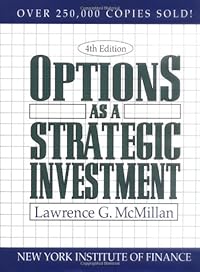

Recommended Reading

Affiliate

As an Amazon Associate, we earn from qualifying purchases.

Frequently Asked Questions

On a $100 stock with moderate volatility, monthly covered calls at 3-5% OTM typically generate $1.50-$3.00 per share per month, or 18-36% annualized. For a portfolio of 500 shares ($50,000 investment), this translates to $750-$1,500 per month. Results vary significantly with volatility, strike selection, and market conditions. Conservative estimates for diversified portfolios are 10-20% annualized.

Sources & References

Embed This Calculator on Your Website

Free to use with attribution

Copy the code below to add this calculator to your website, blog, or article. A link back to CoveredCallCalculator.net is included automatically.

<iframe src="https://coveredcallcalculator.net/embed/monthly-covered-calls" width="100%" height="500" frameborder="0" title="Monthly Covered Calls Calculator" style="border:1px solid #e2e8f0;border-radius:12px;max-width:600px;"></iframe>
<p style="font-size:12px;color:#64748b;margin-top:8px;">Calculator by <a href="https://coveredcallcalculator.net" target="_blank" rel="noopener">CoveredCallCalculator.net</a></p>

Related Calculators

Advanced Covered Calls

Covered Call Annualized Return Calculator

Calculate the annualized return of your covered call strategy. Convert short-term premium income into annualized yield for accurate performance comparison.

Trading Tools

Options Profit Calculator

Calculate your options profit and loss with our free options profit calculator. Analyze calls, puts, spreads, and multi-leg strategies with real-time P&L charts for 2026.

Advanced Covered Calls

Weekly Covered Calls Calculator

Calculate returns for weekly covered call options. Compare weekly vs monthly premiums, analyze annualized income, and optimize your weekly covered call strategy.

Advanced Covered Calls

Covered Call Monthly Income Calculator

Calculate your monthly income from covered call writing. Project cash flow, compare to expenses, and plan a sustainable covered call income strategy.

Advanced Covered Calls

Covered Call Rolling Strategy Calculator

Calculate the cost, credit, and net P&L of rolling your covered call position. Compare roll-up, roll-out, and roll-down scenarios with our free calculator.

Advanced Covered Calls

Covered Call 401k Calculator

Learn about covered call strategies in 401k accounts. Calculate potential income, understand plan restrictions, and explore self-directed 401k options trading.

Covered Calls

Covered Call Calculator

Calculate your covered call returns, breakeven price, maximum profit, and downside protection. Free online covered call options calculator with real-time results for US and Canadian investors in 2026.

More Picks You Might Like

Affiliate

As an Amazon Associate, we earn from qualifying purchases.