Covered Call 401k Calculator

Explore covered call options in your 401k plan, including self-directed brokerage account options and potential income generation.

MB
Operated by Mustafa Bilgic
Independent individual operator
|Advanced Covered CallsEducational only

Input Values

$

Current market price.

$

Your cost basis per share.

$

Strike price of the covered call.

$

Premium per share from selling the call.

Calendar days until expiration.

Number of contracts.

Results

Maximum Profit
$1,050.00
Maximum Return
10.71%
Breakeven Price
$94.50
Premium Income$350.00
Downside Protection0.00%
Annualized Return0.00%
Results update automatically as you change input values.

Related Strategy Guides

Covered Calls in 401(k) Plans

Most employer-sponsored 401(k) plans do not allow individual options trading, which means covered calls are not directly available in a standard 401(k). However, there are ways to access covered call strategies within your retirement plan. Self-directed brokerage accounts (SDBAs), available in some 401(k) plans, allow you to trade individual stocks and options. Additionally, covered call ETFs like QYLD, XYLD, and JEPI implement the strategy for you and are available in most 401(k) investment lineups.

If your 401(k) plan offers a self-directed brokerage account (SDBA), you can sell covered calls just like in an IRA. Major plan providers like Fidelity (BrokerageLink), Schwab (Personal Choice Retirement Account), and Vanguard offer SDBAs with options capability. You typically need to opt in to the SDBA feature and then apply for options approval within that account. This gives you the same flexibility as an IRA combined with the higher contribution limits of a 401(k).

i
401(k) Contribution Advantage

The 2026 401(k) contribution limit is $23,500 ($31,000 if age 50+), far exceeding the $7,000 IRA limit. If your plan offers an SDBA with options, you can sell covered calls on a much larger tax-advantaged base. Combined with employer matching, this can be a powerful wealth-building combination.

Ways to Access Covered Calls in a 401(k)

Covered Call Options in 401(k) Plans
MethodAvailabilityCapital RequiredManagementTax Treatment
Self-Directed Brokerage AccountSome plansMin $10,000+ per positionActive (you manage)Tax-deferred
Covered Call ETFs (QYLD, XYLD)Most plansAny amountPassive (ETF manages)Tax-deferred
Managed Account (JEPI, JEPQ)Some plansAny amountPassive (fund managed)Tax-deferred
After-Tax 401(k) → Roth ConversionSome plansAbove regular limitActive or passiveTax-free (Roth)
401(k) Rollover to IRAAfter leaving jobFull balanceActiveTax-deferred or Roth
Covered Call ETF Income Estimate
Annual Income = ETF Shares × Distribution Per Share × 12
Where:
ETF Shares = Number of shares owned
Distribution Per Share = Monthly distribution per share
401(k) Covered Call Strategy
Given
401k Balance
$200,000
SDBA Allocation
$100,000
CC ETF Allocation
$50,000
Regular Funds
$50,000
Calculation Steps
  1. 1SDBA: Buy 500 shares across 5 stocks, sell covered calls monthly
  2. 2Estimated SDBA income: 1.5% monthly × $100,000 = $1,500/month
  3. 3QYLD allocation: $50,000 at ~11% yield = $458/month
  4. 4Total monthly income: $1,958, all tax-deferred
  5. 5Annual income: $23,500 from covered calls + $5,500 from QYLD = $29,000
  6. 6This income reinvested grows tax-deferred until retirement
Result
A $200,000 401(k) with mixed allocation generates approximately $29,000 annually in covered call income, all tax-deferred. This compounding without tax drag can turn a $200,000 balance into $500,000+ within 10 years.

Setting Up a Self-Directed 401(k) Brokerage Account

SDBA Setup Process

1
Check Plan Availability
Contact your HR department or plan administrator to ask if your 401(k) offers a self-directed brokerage account (SDBA). Common names: BrokerageLink (Fidelity), PCRA (Schwab), Brokerage Option (Vanguard).
2
Enroll in the SDBA
Complete the enrollment form (usually available online through your plan portal). There may be an annual fee ($50-150 at some plans). Transfer a portion of your 401(k) balance to the SDBA.
3
Apply for Options Approval
Within the SDBA, apply for Level 1 options approval (covered calls and cash-secured puts). This is separate from regular 401(k) investment selection. Approval typically takes 1-3 business days.
4
Select Stocks and Sell Calls
Buy shares of covered call candidates and begin selling calls. Manage positions just as you would in an IRA. All income is tax-deferred within the plan.
5
Monitor and Rebalance
Track your SDBA covered call positions alongside your regular 401(k) investments. Ensure your total allocation (SDBA + regular) aligns with your overall retirement plan and risk tolerance.

Covered Call ETFs for 401(k) Plans

  • QYLD (Nasdaq 100 Covered Call): ~11% distribution yield, ATM call writing on QQQ
  • XYLD (S&P 500 Covered Call): ~10% distribution yield, ATM call writing on SPY
  • JEPI (JP Morgan Equity Premium Income): ~8% yield, ELN + S&P 500 exposure
  • JEPQ (JP Morgan Nasdaq Equity Premium): ~10% yield, ELN + Nasdaq exposure
  • DIVO (Amplify CWP Enhanced Dividend Income): ~5% yield, selective overwriting on dividend stocks
  • These ETFs are available in most 401(k) investment menus or through SDBA accounts
  • No options management required: the ETF does all the covered call trading
!
SDBA Restrictions

Not all 401(k) plans offer SDBAs, and those that do may restrict options trading. Some plans only allow stocks and mutual funds in the SDBA (no options). Others limit the percentage of 401(k) assets that can be transferred to the SDBA (often 50-80%). Check your plan's specific rules before planning a covered call strategy.

Understanding Risk Management in Options Trading

Effective risk management is the foundation of long-term options trading success. Unlike stock investing where your maximum loss is your initial investment, options strategies can have complex risk profiles that require careful monitoring. Defined-risk strategies (spreads, iron condors, covered calls) have a known maximum loss before entering the trade, making position sizing straightforward. Undefined-risk strategies (short naked options) require understanding margin requirements and the potential for losses exceeding initial premium collected. All options traders should use the probability of profit (POP) metric — available on most options platforms — to understand the statistical edge before entering any trade.

Managing winning trades is as important as cutting losers. Research from tastytrade and other quantitative options firms shows that closing profitable short options positions at 50% of maximum profit significantly improves risk-adjusted returns compared to holding to expiration. The intuition: after capturing 50% of the premium, the remaining time risk (gamma risk near expiration) exceeds the potential reward. By closing early, you free up capital for new trades and eliminate the tail risk of a sudden reversal wiping out unrealized profits. This 'take profits at 50%' rule is one of the most robust findings in systematic options trading research.
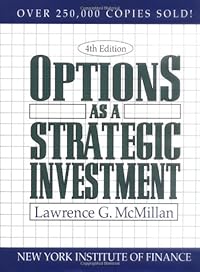

Recommended Reading

Affiliate

As an Amazon Associate, we earn from qualifying purchases.

Frequently Asked Questions

Not in a standard 401(k) with mutual fund-only options. However, if your plan offers a self-directed brokerage account (SDBA), you can trade individual stocks and options including covered calls. Alternatively, you can invest in covered call ETFs (QYLD, XYLD, JEPI) which are available in most 401(k) investment lineups and implement the strategy passively.

Sources & References

Embed This Calculator on Your Website

Free to use with attribution

Copy the code below to add this calculator to your website, blog, or article. A link back to CoveredCallCalculator.net is included automatically.

<iframe src="https://coveredcallcalculator.net/embed/covered-call-401k" width="100%" height="500" frameborder="0" title="Covered Call 401k Calculator" style="border:1px solid #e2e8f0;border-radius:12px;max-width:600px;"></iframe>
<p style="font-size:12px;color:#64748b;margin-top:8px;">Calculator by <a href="https://coveredcallcalculator.net" target="_blank" rel="noopener">CoveredCallCalculator.net</a></p>

Related Calculators

Advanced Covered Calls

Overwriting Options Strategy Calculator

Calculate returns for the overwriting strategy of selling covered calls on existing stock positions. Analyze income overlay, cost basis reduction, and yield enhancement.

Advanced Covered Calls

Unqualified Covered Call Calculator

Understand the tax impact of unqualified covered calls. Calculate how deep ITM calls affect your holding period and capital gains classification.

Advanced Covered Calls

Covered Call Tax Optimization Calculator

Optimize taxes on covered call income. Calculate short-term vs long-term gains, understand qualified covered call rules, and minimize your tax burden legally.

Advanced Covered Calls

Covered Call IRA Calculator

Calculate covered call returns in your IRA account. Understand permitted strategies, tax advantages, and income potential for covered calls in retirement accounts.

Covered Calls

Covered Call Premium Calculator

Calculate the estimated premium for your covered call option using implied volatility, time to expiration, and strike distance. Free covered call premium calculator.

Advanced Covered Calls

Covered Call for Beginners Calculator

Learn covered call basics with our beginner-friendly calculator. Step-by-step guidance, simple examples, and easy-to-understand explanations for new options traders.

Covered Calls

Covered Call Calculator

Calculate your covered call returns, breakeven price, maximum profit, and downside protection. Free online covered call options calculator with real-time results for US and Canadian investors in 2026.

More Picks You Might Like

Affiliate

As an Amazon Associate, we earn from qualifying purchases.