Covered Call Earnings Strategy Calculator

Evaluate the risk and reward of selling covered calls around earnings announcements, where elevated IV creates premium opportunities.

MB
Operated by Mustafa Bilgic
Independent individual operator
|Advanced Covered CallsEducational only

Input Values

$

Current stock price before earnings.

$

Your cost basis per share.

$

Strike price for the earnings-period call.

$

Premium with elevated implied volatility before earnings.

$

What this premium would be without earnings IV expansion.

%

The options-implied expected move for earnings.

Days until option expiration (includes earnings date).

Number of contracts.

Results

Maximum Profit
$4,200.00
IV Premium Bonus
$0.00
Breakeven Price$139.00
Risk if Stock Gaps Down to Expected Move
$0.00
Opportunity Cost if Stock Gaps Up$0.00
Maximum Return (%)
14.48%
Results update automatically as you change input values.

Related Strategy Guides

Covered Calls and Earnings Announcements

Earnings season presents both opportunity and risk for covered call writers. In the weeks leading up to an earnings announcement, implied volatility (IV) rises as the market prices in the uncertainty of the upcoming report. This IV expansion means option premiums are significantly higher than normal, sometimes 50-100% more than non-earnings periods. For covered call sellers, this elevated premium is attractive, but it comes with the risk of a large post-earnings stock price gap.

The core dilemma is straightforward: do you sell a covered call through earnings to capture the inflated premium, or do you avoid the risk of a gap move? There is no universally correct answer. Some experienced traders deliberately sell calls before earnings, pricing in the expected move and choosing strikes accordingly. Others avoid writing calls through earnings entirely, preferring to sell after the announcement when IV has crushed and the stock price has stabilized.

!
Gap Risk Warning

Stocks can gap 10-30% or more after earnings surprises. A large gap down can result in losses that far exceed the elevated premium received. Conversely, a large gap up means your shares are called away and you miss significant gains. Only sell covered calls through earnings if you understand and accept this binary risk.

How Earnings Affect Covered Call Premiums

IV Premium Bonus
IV Bonus = (Earnings Premium - Normal Premium) × 100 × Contracts
Where:
Earnings Premium = The premium with elevated pre-earnings IV
Normal Premium = What the premium would be without earnings IV
Expected Move (from options market)
Expected Move = Straddle Price / Stock Price × 100%
Where:
Straddle Price = Combined price of ATM call + ATM put
Stock Price = Current stock price
Earnings Covered Call Example
Given
Stock
$150
Cost Basis
$145
Strike
$160 (6.7% OTM)
Premium
$6.00 (elevated IV)
Normal Premium
$3.00
Expected Move
8% (~$12)
Calculation Steps
  1. 1IV premium bonus = ($6.00 - $3.00) × 200 = $600 extra income
  2. 2Max profit = ($160 - $145 + $6.00) × 200 = $4,200
  3. 3Breakeven = $145 - $6.00 = $139.00
  4. 4If stock gaps down 8%: Stock at $138, loss = ($138 - $145 + $6) × 200 = -$200
  5. 5If stock gaps up 15%: Stock at $172.50, assigned at $160, opportunity cost = $2,500
  6. 6Strike is outside expected move ($12), so assignment requires a larger-than-expected beat
Result
The elevated IV adds $600 in premium bonus. Maximum profit is $4,200 if stock rises to $160. If the stock drops by the expected move ($12), loss is only $200 thanks to the $6 premium cushion. The breakeven at $139 provides 7.3% protection.

Earnings Strategy Decision Framework

When to Write Covered Calls Through Earnings
FactorWrite Through EarningsAvoid Earnings Period
Your outlookNeutral to mildly bullishStrongly bullish or uncertain
IV percentileVery high (>70th percentile)Average or low
Stock historyTypically moves less than expectedHistory of large surprises
Premium bonus2x+ normal premiumLess than 1.5x normal
Position sizeSmall position, acceptable riskLarge position, core holding
Strike bufferCan sell 10%+ OTM with good premiumNeed to sell ATM for decent premium

Earnings Covered Call Strategies

Three Approaches to Earnings

1
Sell Before, Close Before Earnings
Sell the covered call 2-3 weeks before earnings when IV is ramping up, then buy it back 1-2 days before the announcement. You capture the IV expansion profit without the gap risk. This works because IV rises gradually before earnings, inflating the call price you sold.
2
Sell Through Earnings with Wide OTM Strike
If you choose to hold through earnings, sell a call at least 8-10% OTM. This gives the stock room to gap up without losing your shares. The premium will still be elevated due to IV, though lower than an ATM call. This approach is best when you are mildly bullish and want extra income.
3
Sell After Earnings (IV Crush Approach)
Wait until after the earnings announcement, when IV crushes 30-50% overnight. While premiums are lower post-earnings, the gap risk is eliminated. The stock price has adjusted to the new information, and you can make a more informed strike selection. This is the most conservative approach.
4
Straddle-Adjusted Strike Selection
Calculate the expected move by adding the ATM call and put prices. Set your strike above the current price plus the expected move up. For example, if the expected move is $12 on a $150 stock, sell the $165 call or higher. This prices in the expected move and only results in assignment if the stock moves more than expected.
5
Collar for Protection
If you want to hold through earnings but are worried about a big drop, add a protective put below the stock price. The covered call premium can partially or fully fund the put, creating a collar. This caps both your upside and downside through the earnings event.
~
Pro Tip: IV Rank

Before selling covered calls through earnings, check the stock's IV rank or IV percentile. If current IV is in the top 20% of its historical range, the premium is genuinely elevated and worth capturing. If IV is average despite upcoming earnings, the premium bonus may not justify the gap risk.

Understanding Risk Management in Options Trading

Effective risk management is the foundation of long-term options trading success. Unlike stock investing where your maximum loss is your initial investment, options strategies can have complex risk profiles that require careful monitoring. Defined-risk strategies (spreads, iron condors, covered calls) have a known maximum loss before entering the trade, making position sizing straightforward. Undefined-risk strategies (short naked options) require understanding margin requirements and the potential for losses exceeding initial premium collected. All options traders should use the probability of profit (POP) metric — available on most options platforms — to understand the statistical edge before entering any trade.

Managing winning trades is as important as cutting losers. Research from tastytrade and other quantitative options firms shows that closing profitable short options positions at 50% of maximum profit significantly improves risk-adjusted returns compared to holding to expiration. The intuition: after capturing 50% of the premium, the remaining time risk (gamma risk near expiration) exceeds the potential reward. By closing early, you free up capital for new trades and eliminate the tail risk of a sudden reversal wiping out unrealized profits. This 'take profits at 50%' rule is one of the most robust findings in systematic options trading research.
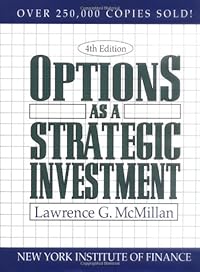

Recommended Reading

Affiliate

As an Amazon Associate, we earn from qualifying purchases.

Frequently Asked Questions

It depends on your risk tolerance and strategy. Selling before earnings captures elevated IV premiums that can be 50-100% higher than normal. However, you face gap risk if the stock moves significantly after the announcement. Conservative traders sell before earnings and buy back before the announcement. Aggressive traders sell through earnings with wide OTM strikes. Never sell ATM or ITM calls through earnings unless you are prepared for assignment.

Sources & References

Embed This Calculator on Your Website

Free to use with attribution

Copy the code below to add this calculator to your website, blog, or article. A link back to CoveredCallCalculator.net is included automatically.

<iframe src="https://coveredcallcalculator.net/embed/covered-call-earnings-strategy" width="100%" height="500" frameborder="0" title="Covered Call Earnings Strategy Calculator" style="border:1px solid #e2e8f0;border-radius:12px;max-width:600px;"></iframe>
<p style="font-size:12px;color:#64748b;margin-top:8px;">Calculator by <a href="https://coveredcallcalculator.net" target="_blank" rel="noopener">CoveredCallCalculator.net</a></p>

Related Calculators

More Picks You Might Like

Affiliate

As an Amazon Associate, we earn from qualifying purchases.