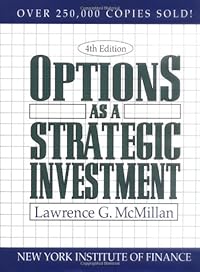
There Is No Single Best Strategy for Covered Calls
The phrase best strategy for covered calls implies one optimal recipe, but the truth is that the best approach is the one matched to your objective for a specific position. A covered call always involves owning at least 100 shares and selling one call against them, yet the strike you choose dramatically reshapes the trade. A strike far above the stock keeps most of the upside but collects little premium. A strike near or below the current price collects rich premium and strong downside protection but caps your gain almost immediately. The best strategy is therefore a deliberate choice along that spectrum, driven by whether you prioritize income, growth, or protection.
This calculator makes that choice measurable. By entering your cost basis, the strike, and the premium, you instantly see the maximum profit, the percentage return, the breakeven, the static return from premium alone, and the downside protection. Running the numbers across several strikes turns an abstract debate about the best strategy into a concrete comparison you can act on.
The Covered Call Profit Formulas
Use the calculator above with the defined inputs below.
Use the calculator above with the defined inputs below.
Use the calculator above with the defined inputs below.
Worked Example With the Default Inputs
- 1Maximum profit = ($105 - $98 + $3.50) x 100 x 1 = $1,050.00
- 2Maximum profit percent = $1,050 / ($98 x 100 x 1) x 100 = 10.71%
- 3Breakeven price = $98 - $3.50 = $94.50
- 4Premium income = $3.50 x 100 x 1 = $350.00
- 5Downside protection = $3.50 / $100 x 100 = 3.50%
- 6Static return = $3.50 / $98 x 100 = 3.57%
- 7Total investment = $98 x 100 x 1 = $9,800.00
Comparing Strike Strategies Side by Side
| Strike | Premium | Max Profit | Max Profit % | Downside Protection |
|---|---|---|---|---|
| $95 (Deep ITM) | $6.50 | $350 | 3.57% | 6.50% |
| $100 (ATM) | $4.50 | $650 | 6.63% | 4.50% |
| $105 (OTM) | $3.50 | $1,050 | 10.71% | 3.50% |
| $110 (Far OTM) | $1.80 | $1,380 | 14.08% | 1.80% |
The table shows the central trade-off clearly. Lower strikes collect more premium and offer more downside protection but cap profit quickly. Higher strikes keep more potential gain but provide thin protection. The premium values shown are illustrative of typical option pricing relationships and will differ in live markets, but the directional pattern always holds.
Matching the Strategy to Your Goal
- Maximum income: choose an at-the-money or slightly in-the-money strike for the largest premium and protection, accepting a tightly capped gain.
- Balanced income and growth: choose a moderately out-of-the-money strike, such as the default $105, for a healthy premium with room for appreciation.
- Growth with a small premium cushion: choose a far out-of-the-money strike to keep most upside while still collecting some income.
- Reducing a position gradually: pick a strike near where you would happily sell the shares anyway, treating assignment as a planned exit.
When a Covered Call Strategy Is the Wrong Choice
Covered calls are unsuitable when you hold a strongly bullish conviction, because capping the upside in a rally forfeits gains that far exceed the premium collected. They are also a poor fit on highly volatile speculative stocks where the downside far outweighs the modest premium cushion, and on positions you intend to hold long term for compounding where repeated assignment would force unwanted sales and tax events. If you cannot tolerate having your shares called away, the strategy is not appropriate regardless of the premium on offer.
Risks to Weigh Before Choosing a Strategy
The premium reduces but does not eliminate downside risk. If the stock falls well below the breakeven, the loss on the shares dwarfs the income collected, and the maximum theoretical loss approaches the cost basis minus the premium if the stock goes to zero. Opportunity cost is the second major risk: a strong rally past the strike means your gain is capped while a buy-and-hold investor keeps climbing. Early assignment, especially on in-the-money calls near an ex-dividend date, can also cut a position short unexpectedly. The calculator shows the profit profile at expiration, so weigh these path risks alongside the headline numbers.
Do not search for a universally best strike. Decide first whether the position is about income, growth, or protection, then let the calculator confirm which strike delivers that objective most efficiently.
Strike Selection Is Only Half the Strategy
Choosing the right strike at entry is the first half of a covered call strategy; managing the position as expiration approaches is the second. The best practitioners decide in advance what they will do under each scenario. If the stock has risen near the strike and you would rather keep the shares, you can buy back the call and sell a higher, later-dated one, a maneuver known as rolling up and out, which usually requires a small net debit but raises the profit ceiling. If the stock has fallen, you may roll down to a lower strike to collect additional premium and lower the breakeven further, accepting a reduced maximum profit in exchange. If most of the premium has already decayed, simply closing the call early frees the shares and the capital for the next decision. A strategy without these contingencies is incomplete no matter how well the initial strike was chosen.
Re-running this calculator with the new strike and premium each time you contemplate a roll keeps the decision grounded in numbers. Comparing the maximum profit, breakeven, and static return before and after a proposed roll shows immediately whether the adjustment improves the position or merely postpones a loss, which is the discipline that separates a deliberate covered call strategy from reactive trading.
Tax Considerations for Covered Call Strategies
In the United States, premium from writing covered calls is generally a short-term capital gain when the call expires or is bought back, regardless of how long you held the shares, and is reported on Form 8949 and Schedule D. IRS Publication 550 also explains the qualified covered call rules: an unqualified covered call, typically one that is too deep in the money or too short-dated, can suspend the holding period of the underlying stock and may affect the qualified dividend treatment of dividends received during the position. These interactions can change after-tax returns materially, so confirm the current Publication 550 at irs.gov or consult a tax professional before choosing a deep in-the-money strategy.
Common Mistakes When Selecting a Strategy
- Always selling the highest-premium strike without considering how severely it caps the upside.
- Ignoring the cost basis and judging the trade only against the current price, which distorts true profit.
- Selling calls below the cost basis, which locks in a loss if the shares are assigned.
- Overlooking the qualified covered call rules and unintentionally turning qualified dividends into ordinary income.
- Choosing a strike without a plan for what to do if the stock is called away or drops sharply.
How This Calculator Helps
Instead of debating which covered call approach is best in the abstract, this tool quantifies maximum profit, percentage return, breakeven, static return, and downside protection for any strike you enter. Run several strikes against the same cost basis and the numbers reveal which choice fits your goal, letting you select a covered call strategy with evidence rather than intuition.