Financial Planning Calculator

Create a personalized financial plan with budgeting, savings projections, investment growth forecasts, and retirement income planning.

MB
Operated by Mustafa Bilgic
Independent individual operator
Income StrategiesEducational only

Input Values

$

Total amount to invest.

%

Expected annual return rate.

$

Additional monthly investment.

Investment time horizon in years.

%

Expected income yield (dividends/interest).

%

Tax rate on investment income.

Results

Future Portfolio Value
$900,527.30
Total Return
0.00%
Annual Income (Year 1)
$36,021.09
Annual Income (Final Year)
$0.00
Total Invested$210,000.00
Total Investment Gain$0.00
Results update automatically as you change input values.

Related Strategy Guides

Understanding Financial Planning

This comprehensive calculator helps you analyze and project returns for financial planning strategies. Whether you are a beginner exploring investment options or an experienced investor optimizing your portfolio, understanding the key metrics and formulas behind financial planning is essential for making informed financial decisions that align with your goals.

The world of financial planning encompasses multiple approaches, each with distinct risk profiles, return expectations, and tax implications. By quantifying these factors, you can compare strategies objectively and build a portfolio that matches your income needs, risk tolerance, and time horizon. Our calculator provides instant projections based on established financial formulas and historical return data.

i
Key Principle

Successful financial planning requires balancing yield, growth, and risk. Higher yields often come with higher risk. The best approach depends on your specific financial situation, time horizon, and income requirements.

How to Calculate Financial Planning Returns

Total Return Formula
Total Return = [(Ending Value + Income - Costs) / Beginning Value - 1] x 100%
Where:
Ending Value = Final portfolio or investment value
Income = All dividends, interest, or premium income received
Costs = Transaction costs, fees, and expenses
Beginning Value = Initial investment amount
Annualized Return
CAGR = (Ending Value / Beginning Value)^(1/Years) - 1
Where:
Ending Value = Final value including reinvested income
Beginning Value = Starting investment
Years = Holding period
Financial Planning Example
Given
Investment
$50,000
Expected Return
7%
Time Horizon
15 years
Monthly Addition
$500
Calculation Steps
  1. 1Year 1 return = $50,000 x 7% = $3,500
  2. 2Monthly contributions add $6,000/year
  3. 3With compounding, Year 5 portfolio = approximately $93,000
  4. 4Year 10 portfolio = approximately $158,000
  5. 5Year 15 portfolio = approximately $257,000
  6. 6Total invested = $50,000 + ($500 x 12 x 15) = $140,000
  7. 7Total gain = $257,000 - $140,000 = $117,000
Result
A $50,000 investment with $500/month at 7% grows to approximately $257,000 in 15 years, nearly doubling the $140,000 total invested.

Key Strategies for Financial Planning

Strategy Comparison for Financial Planning
StrategyExpected ReturnRisk LevelTime CommitmentMin. Capital
Conservative (Bonds/CDs)3-5%LowVery Low$1,000
Moderate (Balanced)6-8%ModerateLow$5,000
Growth (Equity Focus)8-11%Moderate-HighLow$5,000
Income (Dividend Focus)4-6% yieldModerateLow$5,000
Options Enhanced10-15%Moderate-HighMedium$10,000
Aggressive (Small Cap/Sector)10-15%HighMedium$5,000

Building Your Financial Planning Plan

Action Plan

1
Define Your Goals and Timeline
Determine whether you are building for retirement income, supplemental income, or wealth accumulation. Your goals directly determine the best approach to financial planning.
2
Assess Your Risk Tolerance
Be honest about how much volatility you can handle. A portfolio that drops 30% in a downturn may be mathematically optimal but emotionally devastating. Choose a risk level you can maintain through market cycles.
3
Select Your Investment Mix
Diversify across asset classes based on your risk tolerance. A balanced mix of equities, fixed income, and alternatives provides better risk-adjusted returns than concentration in any single asset class.
4
Automate and Stay Consistent
Set up automatic contributions and dividend reinvestment. Consistency and time are more important than timing the market perfectly. Dollar-cost averaging reduces the impact of market volatility.
5
Review and Rebalance Quarterly
Monitor performance against benchmarks. Rebalance when allocations drift more than 5% from targets. Adjust strategy as your goals, timeline, or risk tolerance change.

Tax Considerations

Tax efficiency can significantly impact your net returns. In the United States, qualified dividends and long-term capital gains are taxed at preferential rates of 0%, 15%, or 20%, while interest income and short-term gains are taxed at ordinary rates up to 37%. Strategically placing investments in the right account types (taxable, traditional IRA, Roth IRA) can save thousands in annual taxes.

Canadian investors benefit from the dividend tax credit on eligible Canadian dividends, making domestic dividend stocks particularly tax-efficient in non-registered accounts. Capital gains receive a 50% inclusion rate, meaning only half of gains are taxable. TFSAs provide completely tax-free growth and income, while RRSPs offer tax-deferred growth with deductions on contributions.

~
Tax-Efficient Placement

Hold bonds and REITs (ordinary income) in tax-advantaged accounts. Keep qualified dividend stocks and growth stocks in taxable accounts. This simple strategy can improve after-tax returns by 0.5-1.5% annually without any change to pre-tax allocation.

  • Start early: time is the most powerful factor in financial planning success
  • Diversify across asset classes, sectors, and geographies
  • Minimize fees: every 0.1% saved compounds over decades
  • Reinvest all income during the accumulation phase
  • Stay disciplined through market volatility
  • Review your financial planning strategy at least annually
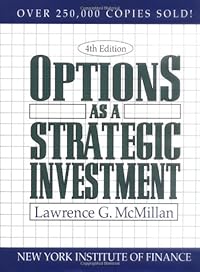
Recommended Reading

Affiliate

As an Amazon Associate, we earn from qualifying purchases.

Frequently Asked Questions

The best strategy depends on your goals, timeline, and risk tolerance. For long-term wealth building, a diversified portfolio of low-cost index funds has historically delivered 8-10% annual returns. For income, dividend growth stocks combined with covered call strategies can generate 6-12% annually. For safety, Treasury bonds and FDIC-insured CDs provide guaranteed returns. Most successful investors combine multiple strategies across different account types for optimal results.

Sources & References

Embed This Calculator on Your Website

Free to use with attribution

Copy the code below to add this calculator to your website, blog, or article. A link back to CoveredCallCalculator.net is included automatically.

<iframe src="https://coveredcallcalculator.net/embed/financial-planning-personal-finance" width="100%" height="500" frameborder="0" title="Financial Planning Calculator" style="border:1px solid #e2e8f0;border-radius:12px;max-width:600px;"></iframe>
<p style="font-size:12px;color:#64748b;margin-top:8px;">Calculator by <a href="https://coveredcallcalculator.net" target="_blank" rel="noopener">CoveredCallCalculator.net</a></p>

Related Calculators

Income Strategies

Theta Decay Calculator

Calculate theta decay for options positions. Visualize how time value erodes daily and understand the impact of theta on your options strategies and premium income.

Income Strategies

NSO Stock Options Calculator

Calculate non-qualified stock option taxes, exercise costs, and net proceeds. Plan NSO exercises for optimal tax treatment and maximum after-tax income.

Income Strategies

Best Investments Calculator

Compare the best investments including stocks, bonds, ETFs, REITs, and options. Calculate projected returns, risk levels, and income potential for your portfolio.

Income Strategies

Best Retirement Investments Calculator

Find the best investments for retirement income. Calculate projected returns from bonds, dividend stocks, annuities, and target-date funds for your retirement plan.

Income Strategies

Passive Income Calculator

Calculate how much passive income you can generate from investments. Estimate returns from dividends, options, real estate, and bonds with our free calculator.

Covered Calls

Covered Call Premium Calculator

Calculate the estimated premium for your covered call option using implied volatility, time to expiration, and strike distance. Free covered call premium calculator.

Profit & Loss

Stock Loss Calculator

Calculate stock losses and tax implications. Free stock loss calculator with tax-loss harvesting analysis, wash sale rules, and capital loss deduction calculations.

Covered Calls

Covered Call Calculator

Calculate your covered call returns, breakeven price, maximum profit, and downside protection. Free online covered call options calculator with real-time results for US and Canadian investors in 2026.

More Picks You Might Like

Affiliate

As an Amazon Associate, we earn from qualifying purchases.