Dividend Yield Calculator

Calculate dividend yield, compare across stocks and ETFs, and learn what constitutes a good yield for different sectors and investment strategies.

MB
Operated by Mustafa Bilgic
Independent individual operator
|Income StrategiesEducational only

Input Values

$

Amount to invest.

$

Current price per share.

$

Annual dividend per share.

%

Expected annual dividend growth rate.

How long you plan to hold.

Results

Current Dividend Yield
0.00%
Annual Dividend Income
$200.00
Yield on Cost (End)
4.00%
Future Annual Income
$0.00
Total Dividends Collected$0.00
Shares Purchased0
Results update automatically as you change input values.

Related Strategy Guides

Understanding Dividend Yield

The concept of what is a good dividend yield is fundamental to building long-term financial security and generating reliable income from your investments. Whether you are just starting your investment journey or looking to optimize an existing portfolio, understanding how what is a good dividend yield works, the key metrics to track, and the strategies that deliver consistent results is essential for making informed decisions.

At its core, what is a good dividend yield involves deploying capital into income-producing assets and strategies that generate regular cash flow. The most successful investors approach what is a good dividend yield with a clear plan, defined targets, and disciplined execution. This calculator helps you quantify your potential returns, compare different approaches, and build a roadmap to your financial goals.

i
Key Principle

Success with what is a good dividend yield requires balancing three factors: yield (how much income you receive), growth (how fast that income increases), and safety (how reliable the income stream is). The best strategies optimize all three rather than maximizing any single factor.

How to Calculate Returns from Dividend Yield

Annual Income
Annual Income = Invested Capital x Annual Yield Rate
Where:
Invested Capital = Total amount deployed in this strategy
Annual Yield Rate = Expected annual income as a percentage of capital
Total Return
Total Return = Income Return + Capital Appreciation - Fees - Taxes
Where:
Income Return = Dividends, interest, or premium income
Capital Appreciation = Increase in asset value
Fees = Transaction costs and management fees
Taxes = Tax liability on income and gains
Dividend Yield Example
Given
Investment
$50,000
Expected Yield
5%
Growth Rate
6%
Time Horizon
10 years
Calculation Steps
  1. 1Year 1 income = $50,000 x 5% = $2,500
  2. 2Year 1 monthly income = $2,500 / 12 = $208
  3. 3With 6% income growth, Year 5 income = $2,500 x (1.06)^4 = $3,155
  4. 4Year 10 income = $2,500 x (1.06)^9 = $4,224
  5. 5Yield on original cost in Year 10 = $4,224 / $50,000 = 8.45%
  6. 6Total income collected over 10 years = approximately $33,000
  7. 7Portfolio with reinvestment grows to approximately $89,500
Result
A $50,000 investment in what is a good dividend yield at 5% yield with 6% annual growth generates $2,500 in Year 1 growing to $4,224 by Year 10, with approximately $33,000 in total income collected.

Strategies and Approaches

Approaches to Dividend Yield
ApproachExpected ReturnRisk LevelTime RequiredBest For
Conservative3-5% yieldLowMinimalRetirees, risk-averse investors
Balanced4-7% yieldModerateLowMost investors, long-term goals
Growth-Focused2-3% yield + 8% appreciationModerate-HighLowYoung investors, wealth building
Income-Enhanced7-12% yieldModerate-HighMediumIncome seekers, options users
Aggressive10-15%+ targetHighMedium-HighExperienced traders

Building Your Strategy

Action Plan for Dividend Yield

1
Define Clear Financial Goals
Determine exactly what you want from what is a good dividend yield: monthly income amount, timeline to achieve it, and acceptable risk level. Writing down specific, measurable goals increases your probability of success significantly.
2
Choose the Right Investment Vehicles
Select investments aligned with your goals. For immediate income, focus on higher-yield options like REITs, covered calls, and high-dividend stocks. For growth, choose dividend growth stocks and index funds that will compound over time.
3
Diversify Across Asset Classes
Spread your investments across at least 4-5 asset classes (stocks, bonds, REITs, options, alternatives) and multiple sectors. This reduces the impact of any single investment underperforming and creates more stable total income.
4
Implement Tax-Efficient Strategies
Place tax-inefficient assets in IRAs/401(k)s and tax-efficient assets in taxable accounts. Use tax-loss harvesting to offset gains. Consider municipal bonds for tax-free income in high brackets. These strategies can save 1-2% annually.
5
Monitor, Adjust, and Stay Disciplined
Review your portfolio monthly and rebalance quarterly. Track actual performance against projections. Adjust strategy as your life circumstances change, but avoid emotional reactions to short-term market movements.

Common Mistakes to Avoid

  1. Chasing unsustainably high yields without analyzing underlying fundamentals
  2. Concentrating too heavily in a single stock, sector, or asset class
  3. Ignoring tax implications and failing to optimize account placement
  4. Timing the market instead of maintaining consistent investments
  5. Neglecting to reinvest income during the accumulation phase
  6. Failing to account for inflation when projecting future income needs
  7. Not having an emergency fund separate from investment capital
~
Start Now, Optimize Later

The most important step in what is a good dividend yield is getting started. Even a small amount invested today begins the compounding process. You can optimize your strategy over time, but you cannot recover lost time. Every year of delay reduces your final results significantly.

The long-term data consistently shows that disciplined investors who follow proven strategies for what is a good dividend yield achieve significantly better outcomes than those who chase trends or try to time the market. Focus on quality investments, reinvest income during accumulation, maintain diversification, and let compounding do the heavy lifting over time.

Building Long-Term Wealth Through Consistent Strategy

Long-term financial success comes from consistent application of sound principles rather than occasional outsized wins. Behavioral finance research consistently shows that investors who trade frequently, chase performance, and deviate from their stated strategy significantly underperform those who maintain a disciplined, systematic approach. Whether you are writing covered calls for income, running spreads, or investing in dividend stocks, the compounding effect of consistent small wins over years dramatically outweighs the excitement of occasional large gains. A 12% annualized return on a $100,000 portfolio becomes $974,000 in 20 years — nearly 10x your initial investment — through the power of compounding alone.

Tax efficiency compounds wealth just as powerfully as investment returns. The difference between a 10% pre-tax return in a taxable account (losing 15-20% to capital gains taxes) and a 10% return in a Roth IRA (completely tax-free) amounts to hundreds of thousands of dollars over a 30-year investment horizon. Maximizing tax-advantaged account contributions before investing in taxable accounts is one of the highest-return, lowest-risk financial decisions available to most investors. Even with options strategies, executing covered calls inside a Roth IRA eliminates the short-term capital gains tax treatment that applies to option premiums in taxable accounts.
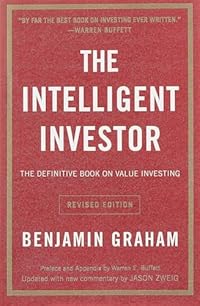
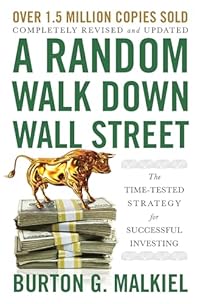
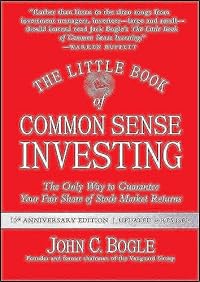
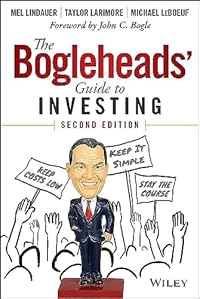
Recommended Reading

Affiliate

As an Amazon Associate, we earn from qualifying purchases.

Frequently Asked Questions

The best approach to what is a good dividend yield depends on your specific situation. For most investors, a diversified portfolio combining dividend growth stocks (40-50%), bonds or fixed income (20-30%), REITs (10-15%), and options strategies (10-15%) provides the best balance of income, growth, and safety. Start with low-cost ETFs for diversification, then add individual holdings as your portfolio and knowledge grow. The key is consistency: regular contributions and reinvested income compound powerfully over time.

Sources & References

Embed This Calculator on Your Website

Free to use with attribution

Copy the code below to add this calculator to your website, blog, or article. A link back to CoveredCallCalculator.net is included automatically.

<iframe src="https://coveredcallcalculator.net/embed/dividend-yield-calculator" width="100%" height="500" frameborder="0" title="Dividend Yield Calculator" style="border:1px solid #e2e8f0;border-radius:12px;max-width:600px;"></iframe>
<p style="font-size:12px;color:#64748b;margin-top:8px;">Calculator by <a href="https://coveredcallcalculator.net" target="_blank" rel="noopener">CoveredCallCalculator.net</a></p>

Related Calculators

Income Strategies

Dividend Investing Calculator

Plan your dividend investing strategy with our calculator. Project portfolio growth, income milestones, and the compounding effect of reinvested dividends over time.

Income Strategies

Average Dividend Yield Calculator

Calculate and compare average dividend yields across market indices, sectors, and individual stocks. Understand yield benchmarks for your portfolio.

Income Strategies

Safe Investments for Retirees Calculator

Find the safest investments for retirement income. Compare Treasury bonds, CDs, high-dividend stocks, and fixed annuities to protect your retirement savings.

Income Strategies

Best Dividend Stocks Screener

Find the best dividend stocks using our screening calculator. Compare yields, payout ratios, growth rates, and total returns for top US and Canadian dividend payers.

Trading Tools

Option Price Calculator

Calculate option prices using real-time inputs. Our free option price calculator computes fair value, Greeks, and profit potential for calls and puts instantly.

Income Strategies

Dividend Income Calculator

Calculate your dividend income from stocks, ETFs, and REITs. Estimate annual and monthly payouts, tax impact, and income growth projections with our free tool.

Financial Planning

Dividend Reinvestment (DRIP) Calculator

Calculate the power of dividend reinvestment (DRIP). See how reinvesting dividends grows your investment exponentially over time with compound growth.

Financial Planning

Dividend Calculator

Calculate your annual dividend income from stocks and ETFs. Enter your investment amount and dividend yield to see quarterly, monthly, and annual payouts.

More Picks You Might Like

Affiliate

As an Amazon Associate, we earn from qualifying purchases.